Inner cartilage
Snug Piercing Guide
Learn snug piercing pain, healing time, jewelry, anatomy suitability, and what to avoid during healing.
What is a snug piercing?
A snug piercing is placed in the horizontal pass through the anti-helix ridge. It is commonly searched as anti-helix piercing or snug ear piercing.
Where is it located?
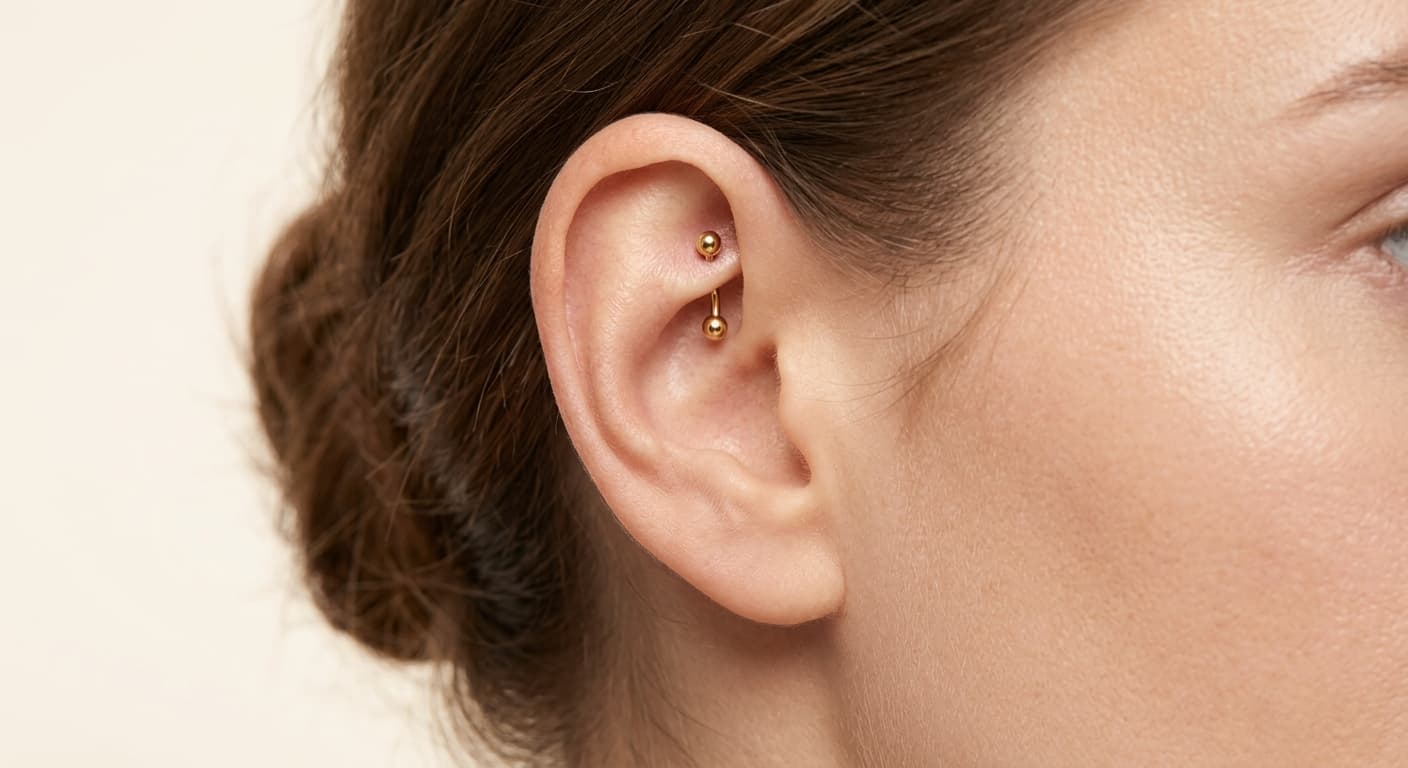
Needs a strong ridge and correct angle; some ears are better suited to a faux snug.
Snug Piercing pain level
Subjective estimate: 7/10, High. Snug piercings pass through a pronounced cartilage ridge and are often rated as more intense.
Snug Piercing healing time
Typical range: 9-12 months. This placement can be slower and more anatomy-dependent than simpler cartilage piercings.
Best jewelry for a snug piercing
Initial jewelry
- curved barbell
After healing
- curved barbell
- small decorative ends
For fresh piercings, ask for smooth, implant-grade materials such as ASTM/ISO-compliant titanium, suitable solid gold, platinum, or niobium.
Is it right for your ear shape?
Best for
- prominent anti-helix ridges
- experienced cartilage collectors
Not ideal for
- flat ridges
- first cartilage piercing
- side sleepers
Pros and cons
Pros
- prominent anti-helix ridges
- experienced cartilage collectors
Cons
- migration
- persistent irritation
- hard healing
What to avoid during healing
- Do not twist or rotate fresh jewelry.
- Avoid sleeping directly on the piercing while it is tender.
- Avoid alcohol, hydrogen peroxide, iodine, harsh soaps, and over-cleaning.
- Avoid initially: rings
- Avoid initially: tight bars
- Avoid initially: large ends
Aftercare tips
- Wash hands before touching the area.
- Clean gently with sterile saline or as advised by your piercer.
- Let the jewelry stay still unless your piercer tells you otherwise.
Seek medical care for spreading redness, heat, swelling, pus, fever, or pain that persists or returns after improving.
Similar piercings
FAQs
Does a snug piercing hurt?
The estimate is 7/10, but pain depends on placement, technique, anatomy, and personal pain tolerance.
Can I sleep on it?
Avoid direct pressure while it is fresh. This placement has a high sleep impact estimate.
When can I change jewelry?
Ask your piercer. Jewelry changes too early can irritate the channel, especially for cartilage.